Finasteride is the only tablet approved for male pattern hair loss, and the one drug that acts on its cause. One milligram a day cuts scalp dihydrotestosterone by about two thirds; in the two-year registration trials 9 men in 10 stopped losing hair and about two thirds regrew some. It is for men only, it has to be taken for as long as you want the hair, and a small minority get sexual side effects. The ten finasteride products available to order are listed first; the rest of the page covers what decides which one to take.
Finasteride-based products
Prices are current list prices in USD for the largest pack and change with pack size. Each card opens the product page in a new tab.
What finasteride is
Finasteride is a synthetic steroid that blocks 5-alpha-reductase, the enzyme that turns testosterone into dihydrotestosterone, DHT. Merck developed it in the 1980s for enlarged prostate, and the 5 mg tablet reached the market as Proscar in 1992. Men on it kept their hair, so Merck ran hair trials at a fifth of the dose and got the 1 mg tablet approved as Propecia in December 1997. The US patent ran out in 2013, which is why ten versions of the same molecule appear on this page.
It blocks the type II and type III forms of the enzyme, the ones concentrated in the hair follicle and prostate, and leaves type I, found in skin and liver, mostly alone. At 1 mg a day serum DHT falls by about 70% and scalp DHT by about 60%. Testosterone itself rises slightly, by around 10%, because less of it is being converted. Dutasteride, the related drug, blocks all three forms and drops DHT by over 90%; it is stronger, lasts far longer in the body, and is not approved for hair loss anywhere except Japan and South Korea.
What it does to a follicle
In men with pattern baldness, follicles on the top of the scalp carry androgen receptors that respond to DHT by shrinking the follicle a little with each growth cycle. Hairs come back thinner, shorter and paler until the follicle produces nothing visible. The follicles at the back and sides lack the sensitivity, which is why that hair survives and why transplants work.
Finasteride does not act on the follicle directly. It lowers the DHT reaching it, and the follicle, no longer being pushed to shrink, gradually returns to a larger size over several cycles. Three consequences follow from that:
- It is slow. A hair cycle on the scalp takes months, and recovery needs several cycles. Nothing visible happens before month three and judgement waits until month twelve.
- It stops the process rather than reversing it. Follicles that have gone fully dormant stay dormant. Regrowth comes from follicles that were shrinking but still alive, which is why it works best in men who start early.
- It does nothing for hair that was never DHT-driven. Alopecia areata, telogen effluvium, scarring alopecia and hair loss from drugs or illness do not respond.
Strengths and forms
| Form | Who it is for | Dose | Notes |
|---|---|---|---|
| 1 mg tablet | Men with pattern hair loss | 1 tablet daily | The approved hair-loss dose. Propecia, Finpecia, Finax, Finrest, Finalo, Proscalpin, Finast 1 mg. |
| 5 mg tablet | Prostate dose; hair-loss users split it | ¼ tablet daily (≈1.25 mg) | Proscar, Fincar, Proscare, Finast 5 mg. Cheapest per milligram. Needs a pill cutter. |
| Topical 0.1–0.25% | Men who want less of the drug in the blood | 1 ml daily or twice daily | Lowers scalp DHT by a similar amount with a fraction of the serum exposure. Morr F combines it with minoxidil 5%. |
| Dutasteride 0.5 mg | Men who fail finasteride | 1 capsule daily | Off-label outside Japan and Korea. Stronger, with a 5-week half-life. Listed on the where-to-buy page as Avodart. |
The dose-response curve is flat above 0.2 mg. In Merck’s dose-ranging study, 0.2 mg, 1 mg and 5 mg produced almost the same hair counts at one year. That is the reason a quartered 5 mg tablet works, and the reason there is no point taking more than 1 mg for hair.
What the trials actually show
The registration trials enrolled 1,553 men aged 18 to 41 with thinning at the crown and followed them for two years, 1 mg against placebo. Hair counts in a one-inch circle rose by 86 hairs at one year and by 138 at two years on finasteride, while the placebo group lost 21 and then 50. Clinical photographs rated 66% of treated men as improved at two years against 7% on placebo. An extension carried 1,215 of them to five years: 90% of men on finasteride had no visible progression, against 25% on placebo, and about two thirds showed regrowth.
A separate trial in 326 men with frontal thinning showed the drug works at the hairline too, though the gains were smaller than at the crown. A Japanese clinic followed 523 men for up to ten years on 1 mg and found progression halted in 99% and improvement in 92%, with the response growing out to year five and holding after that.
Combined with minoxidil it does better than either drug alone. In a 2015 trial of 450 men, 94% of those on both improved against 81% on finasteride alone and 59% on minoxidil alone at one year.
What the trials do not show is a cure. Men taken off finasteride in the placebo-crossover arms lost their gains within a year and were back where they would have been untreated.
Pros and cons
Pros
- Acts on the cause of pattern hair loss, not just the symptom.
- Stops further loss in about 9 men in 10 and regrows hair in about 2 in 3.
- One tablet a day, with or without food, at any time. Nothing to apply.
- Works at the hairline as well as the crown, unlike minoxidil.
- Response keeps improving to year five and holds for a decade or more.
- Generic cost under a dollar a day, under 30 cents if you quarter 5 mg tablets.
- Combines with minoxidil for a larger effect than either alone.
Cons
- Men only. Not approved for women at any age; forbidden in pregnancy.
- Sexual side effects in roughly 1 in 50 to 1 in 20 users: lower libido, weaker erections, less semen.
- A small number of men report sexual or mood symptoms that persist after stopping; the cause is disputed and the label now carries the warning.
- Lifelong. Stop, and the hair you kept is lost within a year.
- Slow: three months before anything, twelve before you can judge.
- Halves PSA, which can hide prostate cancer unless the doctor knows to double the reading.
- Cannot donate blood while taking it or for a month after.
What to expect, month by month
| Timeframe | What happens |
|---|---|
| Weeks 1–4 | DHT falls within days. No visible change. Any sexual side effects usually appear in this window. |
| Months 1–3 | Some men see a mild shedding wave as follicles reset. Less common and less dramatic than with minoxidil. |
| Months 3–6 | Shedding slows. Hair feels fuller before it looks fuller. Early photos may show thickening at the crown. |
| Months 6–12 | Regrowth becomes visible in responders. Twelve months is the point to judge whether it is working. |
| Years 1–5 | Hair counts keep rising. Peak response is usually around year two, with further gains to year five. |
| Year 5 and on | Maintenance. Density holds in most men; a slow decline in some as age-related loss continues. |
| After stopping | DHT returns to baseline within two weeks. Hair gained is shed over 6 to 12 months. |
Side effects, in numbers
Sexual. In the two-year trials, reduced libido was reported by 1.8% of men on finasteride against 1.3% on placebo, erectile difficulty by 1.3% against 0.7%, and reduced ejaculate volume by 1.2% against 0.7%. The excess over placebo is about 1 in 100. The symptoms went away in every man who stopped the drug and in more than half of the men who carried on taking it. Later observational studies put the rate higher, up to 1 in 20, because real-world patients are older and report more freely than trial participants.
Persistent effects. Since 2011 the US label has listed sexual dysfunction that continued after stopping, and since 2022 the European and US labels list depressed mood and suicidal thoughts. The reports are real; whether finasteride caused them is disputed, because no controlled trial has reproduced them and the rate in prescribing databases is very low. The practical rule: if mood or sexual function changes in the first months, stop and see a doctor rather than wait for it to pass.
Other. Breast tenderness or enlargement in about 0.4%, usually reversible. Rash and testicular pain are rare. Finasteride is not metabolised in a way that interacts with common drugs, and alcohol does not affect it. It is not a liver or kidney risk at 1 mg.
Fertility and pregnancy. The drug reaches semen at levels far too low to affect a foetus, and the label places no restriction on men whose partners are pregnant. Sperm counts fall slightly in some men and recover on stopping. Pregnant women must not handle broken or crushed tablets: absorbed finasteride can prevent the genitals of a male foetus from forming normally. Whole, coated tablets are safe to touch.
Who should skip it
- Women, at any age. It does not work in premenopausal women at 1 mg, and in women who can become pregnant it is contraindicated outright.
- Anyone under 18: no trial data.
- Men with a history of depression that worsened on hormonal drugs, unless a doctor is monitoring.
- Men already on dutasteride; the two do the same thing and stacking them adds side effects, not hair.
- Men with patchy, sudden or total hair loss. Finasteride treats pattern thinning only.
- Men due for a PSA test who have not told the doctor; the result will read half of its true value.
How to take it so it works
- One milligram once a day, or a quarter of a 5 mg tablet. Same time each day is good practice, not a requirement; the drug’s effect on DHT lasts well past 24 hours.
- With or without food. Fat, coffee and alcohol make no difference to absorption.
- Missed a day: take the next dose as usual. Do not double up. A single missed day does not undo anything.
- If splitting 5 mg tablets, use a pill cutter, cut over a plate, and wipe up the dust. Uneven quarters do not matter; the dose-response is flat between 0.2 and 5 mg.
- Photograph the crown and hairline under the same light on day one and every 30 days. Judge at 12 months, not before.
- Add 5% minoxidil if you want the largest effect; the combination outperforms either drug alone. The minoxidil products are on the minoxidil page.
- Tell any doctor ordering a PSA test that you take finasteride.
- If sexual function or mood changes, stop and talk to a doctor. Most effects reverse within weeks of stopping.
1 mg or a quartered 5 mg?
The 1 mg tablet is the approved product, coated, no cutting, one a day. The 5 mg tablet costs about twice as much per tablet but holds five times the drug, so quartering Proscar brings the daily cost to about 25 cents. The downside is the cutter, the dust, uneven pieces and a coating that no longer protects the tablet from moisture once cut. Because the dose-response curve is flat, a quarter that comes out at 1 mg or 1.5 mg works the same. Men who share a household with a pregnant woman should buy the 1 mg and skip the cutting.
The products, one by one
Every item below is in stock and ships worldwide. Prices are per tablet in the largest pack at the time of writing; small packs cost more per tablet.
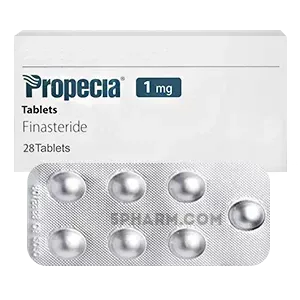
Propecia
Finasteride 1 mg / 5 mg · Organon, formerly Merck
The original 1 mg finasteride tablet, the one every trial in the section above was run on. Film-coated, octagonal, taken once a day. The 5 mg listing under the same name is the prostate strength, identical to Proscar.
The one to start with if you want the exact product from the trials, or if a recognised box matters at customs. The generics below contain the same 1 mg and cost less; move to one after the first three months if price matters.
$0.50per pill
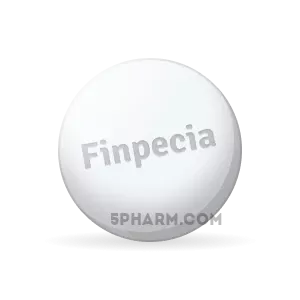
Finpecia
Finasteride 1 mg / 5 mg · Cipla, India
Cipla’s 1 mg finasteride and the most widely sold generic in Asia. Same dose, same once-daily schedule as Propecia. Cipla also makes the 5 mg under the same name for prostate use.
The usual choice for anyone who has decided finasteride is for them and wants a 6-month or 12-month supply at the lowest cost per tablet in a large pack.
$0.95per pill
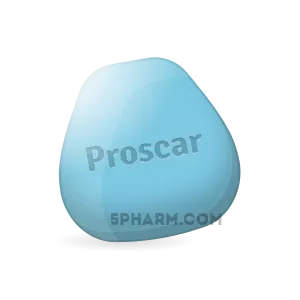
Proscar
Finasteride 5 mg · Organon, formerly Merck
The 5 mg prostate tablet that came first, in 1992. Hair-loss users quarter it with a pill cutter to get about 1.25 mg a day, which works as well as 1 mg because the dose-response curve is flat above 0.2 mg. The tablets are film-coated; cutting breaks the coating and leaves dust.
The cheapest way to buy finasteride per milligram, if you are willing to cut tablets. Do not do the cutting anywhere a pregnant woman might touch the dust.
$0.98per pill
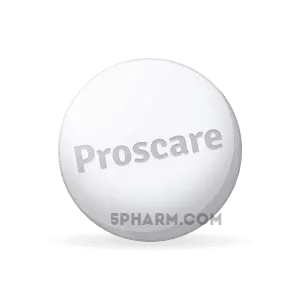
Proscare
Finasteride 5 mg
A 5 mg generic of Proscar. Same quartering routine for hair loss: one tablet gives four days of roughly 1.25 mg each, about 28 cents a day.
An alternative to Proscar when it is cheaper or in stock when Proscar is not. For a 1 mg tablet that needs no cutting, look at Finpecia or Finax.
$1.11per pill

Finrest
Finasteride 1 mg
A 1 mg generic sold in strips of 10. Nothing to cut, nothing to measure: one tablet a day.
A plain 1 mg option in the middle of the price range. Buy it on price against Finpecia and Finax; the three are interchangeable.
$1.39per pill
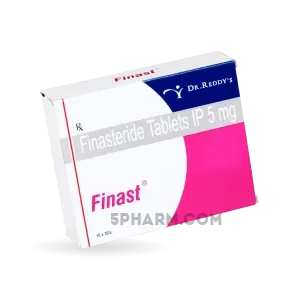
Finast
Finasteride 1 mg / 5 mg · Dr. Reddy’s Laboratories, India
Dr. Reddy’s finasteride, available at 1 mg for hair and 5 mg for prostate. Dr. Reddy’s supplies finasteride to the US and European generic markets, so the same factories make the version sold here.
The one to pick if a manufacturer with Western regulatory inspections on record matters to you. On the tablet itself it is interchangeable with Finpecia.
$1.59per pill
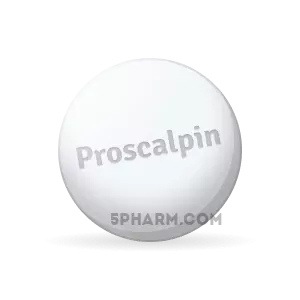
Proscalpin
Finasteride 1 mg · Cipla, India
Cipla’s second 1 mg brand, sold in strips of 10. Same tablet as Finpecia under a different name, made for the Indian retail market where the two sit side by side on the shelf.
Pick it when it is cheaper than Finpecia that month; there is no other reason to prefer one over the other.
$1.59per pill
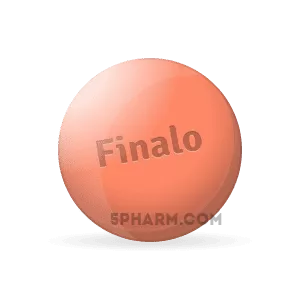
Finalo
Finasteride 1 mg · Intas Pharmaceuticals, India
Intas’s 1 mg finasteride, from the same company as Lonitab oral minoxidil and the Morr F combination. Strips of 10.
Convenient if you already buy Intas minoxidil products and want one supplier. On price alone it loses to Finpecia.
$1.90per pill
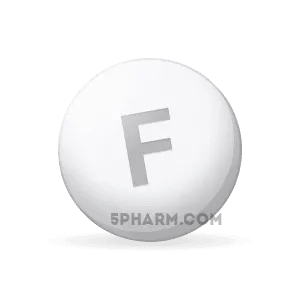
Finax
Finasteride 1 mg · Dr. Reddy’s Laboratories, India
Dr. Reddy’s 1 mg brand for the hair-loss market, as opposed to Finast which covers both strengths. Strips of 30, which is one month per strip.
The 30-tablet strip is the tidiest format for travel. The tablet inside is the same as Finast 1 mg.
$2.09per pill

Fincar
Finasteride 5 mg · Cipla, India
Cipla’s 5 mg tablet, the prostate strength. For hair loss it is cut into quarters like Proscar. Sold in strips of 10.
Quartered, it comes to about 57 cents a day: more than Proscar or Proscare, level with Propecia 1 mg, and with the cutting on top. Buy it when the other two 5 mg tablets are out of stock.
$2.27per pill
Before you order
- Decide between 1 mg tablets and quartered 5 mg first. The 1 mg costs more per day and takes less effort; the 5 mg is the other way round.
- Buy six months at once. Nothing is visible before month three and the first fair judgement is at twelve; a 30-tablet pack is a false economy.
- Pack sizes change the per-tablet price by up to 40%. The card prices above are for the largest pack.
- Customs: finasteride is prescription-only in the US, UK and EU. Personal-import rules allow a three-month supply in most countries; large packs may be held.
- If you are starting both drugs, start minoxidil at the same time rather than later; the combination trials began both on day one.
Questions people ask before buying
Is 1 mg really enough? Yes. In the dose-ranging trial 1 mg and 5 mg gave the same hair counts. Taking more adds side effects, not hair.
Can I take it every other day? The half-life is short, about 6 hours, but DHT suppression outlasts it and some men do well on alternate days. The trials used daily dosing and that is what the numbers above refer to.
Will it bring back a receding hairline? It slows and partly reverses frontal thinning in most men, with smaller gains than at the crown. It will not refill a hairline that has been bare for years.
Does it affect testosterone? Testosterone rises slightly, by around 10%, because less is converted to DHT. Muscle mass and strength are unaffected in the trials.
What about topical finasteride? It lowers scalp DHT by a similar amount with much less drug in the blood, and the first products were approved in Europe in 2022. Morr F, on the minoxidil page, combines it with 5% minoxidil.
How long before I can stop? You cannot, if you want to keep the hair. Men who stop lose the benefit over the following year.
Full hair-loss catalog
Minoxidil, dutasteride and the combination products are on the hair-loss category page.
Sources
- Kaufman KD et al. Finasteride in the treatment of men with androgenetic alopecia. J Am Acad Dermatol 1998;39:578–89.
- The Finasteride Male Pattern Hair Loss Study Group. Long-term (5-year) multinational experience with finasteride 1 mg in the treatment of men with androgenetic alopecia. Eur J Dermatol 2002;12:38–49.
- Leyden J et al. Finasteride in the treatment of men with frontal male pattern hair loss. J Am Acad Dermatol 1999;40:930–7.
- Roberts JL et al. Clinical dose ranging studies with finasteride, a type 2 5α-reductase inhibitor, in men with male pattern hair loss. J Am Acad Dermatol 1999;41:555–63.
- Yanagisawa M et al. Long-term (10-year) efficacy of finasteride in 523 Japanese men with androgenetic alopecia. Clin Res Trials 2019;5:1–5.
- Hu R et al. Combined treatment with oral finasteride and topical minoxidil in male androgenetic alopecia: a randomized and comparative study in Chinese patients. Dermatol Ther 2015;28:303–8.
- Drake L et al. The effects of finasteride on scalp skin and serum androgen levels in men with androgenetic alopecia. J Am Acad Dermatol 1999;41:550–4.
- Propecia (finasteride) US prescribing information, Organon, revised 2022.